Laura Gilpin Photographer
July 17 - August 29, 2026
Opening Reception July 17, 4 – 6pm
Gallery Talks
July 18th 4 pm
Exhibition Walk-through
David Scheinbaum
July 25th 4 pm
Laura Gipin, Life and Work
Marni Sandweiss, Professor
August 8th 4 pm
Betsy Forster and Laura Gilpin, A Reminiscence
Jerry Richardson,
Retired Attorney, Executor of the Laura Gilpin Estate and Chosen Family
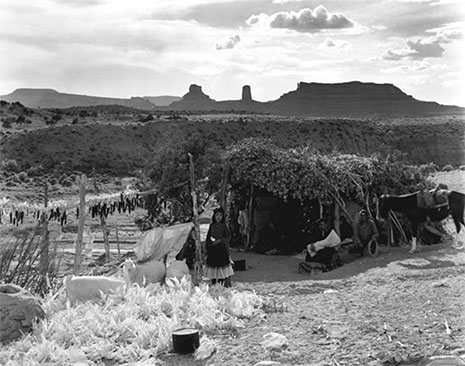
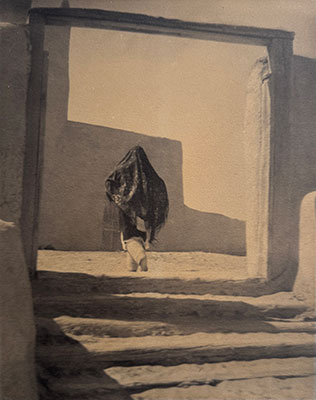
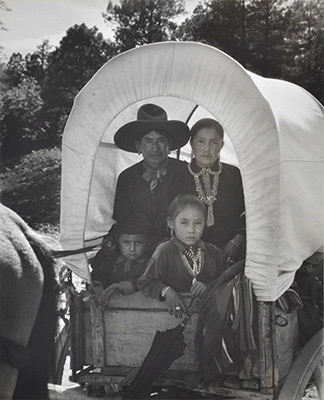
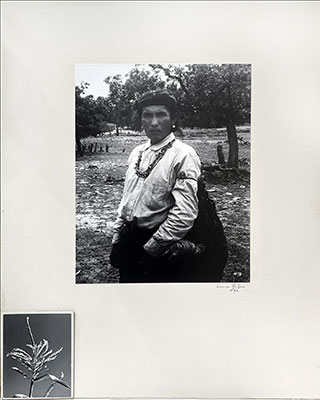
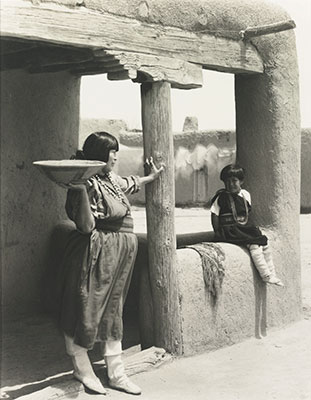
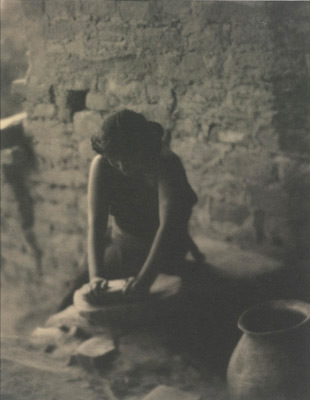
“Laura Gilpin wished that there only be one word as her epitaph on her gravestone. That was “Photographer.” Although the pursuit of art and beauty was a life-long passion, photography was the touchstone for a long and productive life which defined the way she saw the world and her place in it. Her love of the wide-open spaces of the American West and her interest in the people. Especially the native people who inhabited this land provided the subject matter that inspired her life’s work.
Jerry Richardson
Retired Attorney, Executor of the Laura Gilpin Estate and Chosen Family
Scheinbaum & Russek is honored to present an exquisite selection of Laura Gilpin’s work to our community. After many years of seeking out her work, we have gathered an extraordinary collection of Gilpin’s photographs representing many facets of her 60-year career as a photographer.
Gilpin was a long-time Santa Fe resident and renowned photographer. Since her death in 1979, her photographs have rarely been shown in Santa Fe. Included in this exhibition are exquisite examples of her early, masterful platinum prints, much admired by photographers and connoisseurs alike.
Laura Gilpin began photographing in her early teens, when she decided to pursue it as a lifelong endeavor. She asked her mentor, Gertrude Käsebier, a renowned pictorialist photographer, for advice on where she could study. Käsebier recommended the Clarence White School of Photography in New York City.
Even before leaving for New York in 1916 to study with Clarence H. White, Gilpin photographed the landscape of her native Colorado. After her return, she became interested in the region’s history and archaeology and photographed the people and landscape of the area’s pueblos and their ancient ruins.
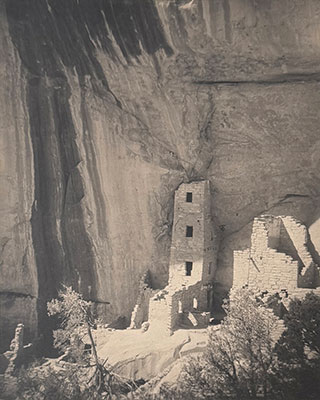
Gilpin’s early Southwestern pictures reflect the influence of her training. The pictorialists placed greater emphasis on the evocation of mood than on detail and favored the soft, delicate grays of platinum printing papers. Thus, Gilpin’s soft-focus platinum prints of Mesa Verde and her sweeping landscapes of the Colorado prairies suggest as much about the emotion she felt upon viewing the scene as the subject.
Gilpin’s long involvement with the Navajo began in l930, when she and her companion, Elizabeth Forster, ran out of gasoline in a remote section of the Navajo Nation. Gilpin’s early Navajo pictures focused on particular individuals. Through these portraits, she came to understand the difference between sentimentality and sentiment; she created a compassionate record of traditional Navajo life of the era.
To make a living during the Depression, Gilpin published photographic postcards, worked on a series of lantern slides on archaeological subjects and took on commercial assignments. In l94l, she published her first major book, The Pueblos: A Camera Chronicle. After WWII, she settled in Santa Fe and published Temples In The Yucatan: A Camera Chronicle of Chichen Itza and The Rio Grande: River of Destiny, which established her importance as a cultural geographer and reiterated the significance of her landscape work.
In 1950, she went back to the Navajo Nation and re-photographed many of her previous subjects for her 1968 book, The Enduring Navajo.
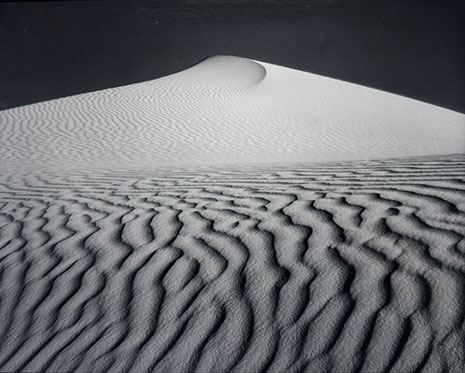
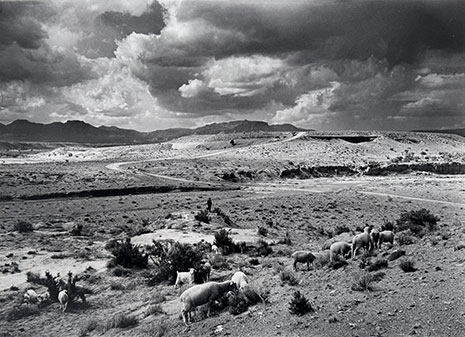
Few photographers, whose careers span the history of photography in the 20th century, have created works as pictorialists, straight landscape photographers, and documentarians. In this exhibition, we have gathered, with the help of many people, her early pictorial photographs, several of Laura’s signature landscapes, and pieces from her groundbreaking publication, The Enduring Navajo.
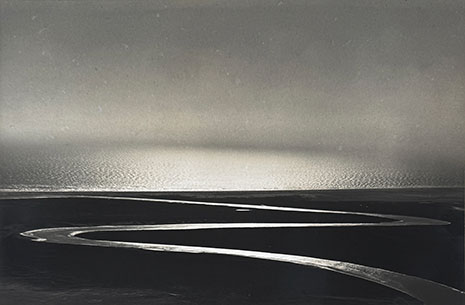
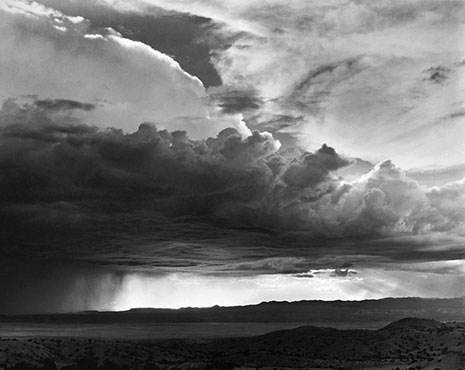
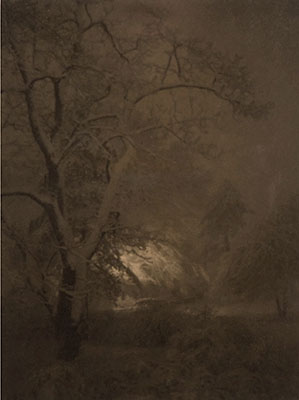
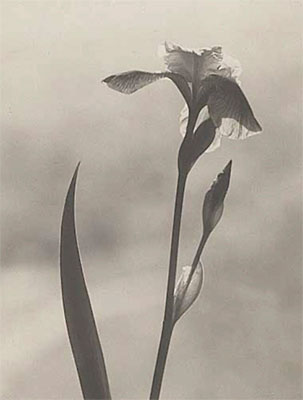
Highlights in this exhibition include a 1917 platinum print of Snow Storm in Central Park (no. 1.) from her days at the Clarence White School of Photography in New York, the earliest photograph of Laura’s we have ever exhibited; a delicate floral still life printed in platinum; as well as her most well-known image, Storm Over La Bajada, in a mural size, and a stunning vintage print from her Rio Grande project. Additionally, the photographs of Native American subjects, printed in both silver and platinum, span her days as a pictorialist through her work with the Navajo Nation.
For years, Laura Gilpin has been known regionally as the master photographer she was. Her contributions to the medium are both artistic and technical. Her work with the Dine (Navajo) gives voice to the Indigenous Cultures of our region.
Over the many years we have worked with Laura’s prints, we have met collectors from around the world who have heard of Laura Gilpin but have not seen her original photographs. Our hope is that this exhibit will change that. Seeing the original print, rather than a reproduction, is life-changing.
We are pleased to share that major museum exhibitions of her work are being planned for the coming years. Finally, as Stieglitz would say, “She has arrived”.
Gilpin’s early southwestern pictures and portrait studies reflect the influence of her training. The pictorialists placed greater emphasis on the evocation of mood than on detail, and favored the soft, delicate grays of platinum printing papers. Thus Gilpin’s soft-focus platinum prints of Mesa Verde and her sweeping landscapes of the Colorado Prairies suggest as much about the emotion she felt upon viewing the scene as about the subject itself.
A remarkable consistency of vision links her sixty years of work. Whether printed on platinum or silver paper, her pictures are characteristically infused with a soft, luminous light, and composed with a simple, classical elegance.
Martha A. Sandweiss
An Enduring Grace, The Amon Carter Museum, 1986