Luis González Palma
The Silence of Symphonies
October 9th – November 14th, 2026
When you are born you acquire the mantle of pain and it is not until you die that you can get rid of it….the fundamental element of my creative experiences…the consciousness of my own solitude.
Luis González Palma
Opening Reception and Gallery Talk
October 9th, 4 – 6 pm
Gallery Talk with David Scheinbam 4:30 pm
812 Camino Acoma

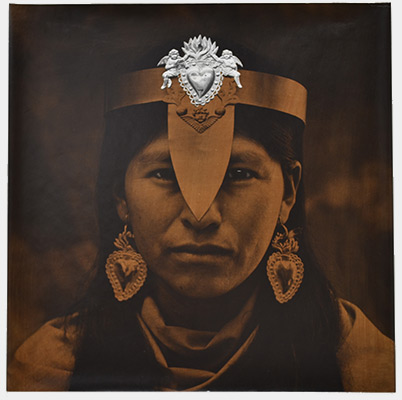
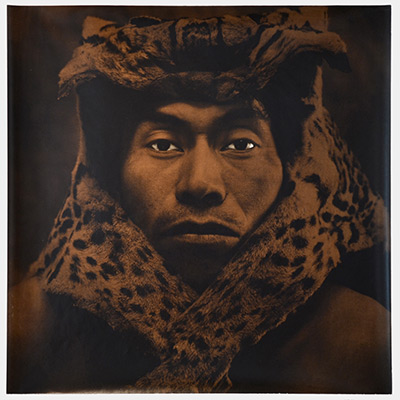
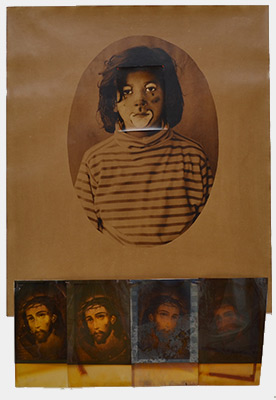
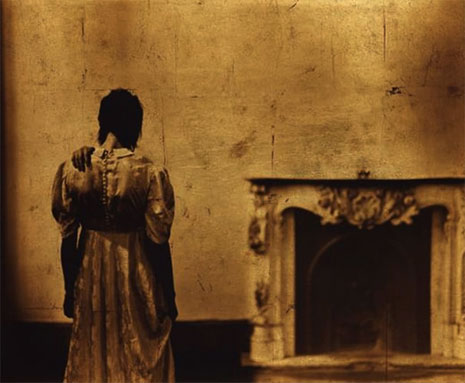
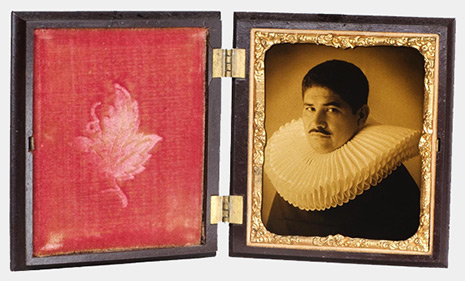
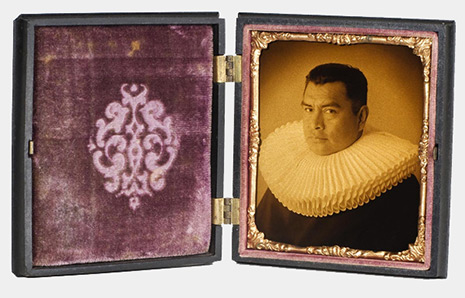
Once again, Scheinbaum & Russek Ltd is proud to present the early works of Luis González Palma to our community. We first encountered González Palma’s work at the Houston Foto Fest in 1992. His photographs were displayed against a wall covered with old burlap coffee bags, with the prints nailed directly over them. We immediately recognized that his approach to image-making—and to the presentation of photographic prints—was unlike anything we had encountered before.
When we later exhibited his work in our gallery, we learned more about his life and work, and we came to understand that, for him, the photographic image was about memory and physicality. He talked about his grandmother gathering the children around her and opening a shoebox filled with family photographs, handling each print as her stories were told. The look of Palma’s prints, including the distressed paper and applied varnish, brought him back to those childhood memories.
We continued to exhibit his works at our gallery over the years. In 2007, the Lannan Foundation asked us to present an installation of Luis’ work at their gallery space, in conjunction with Site Santa Fe’s exhibit Los Desaparecidos/ The Disappeared.
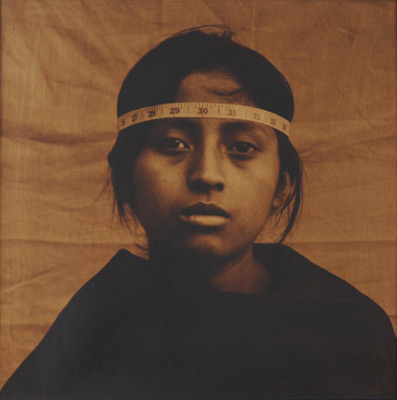
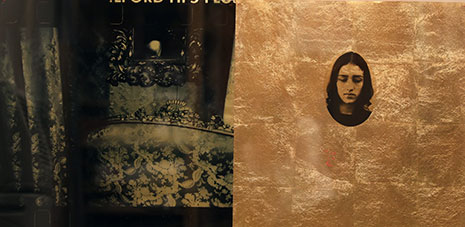
The exhibit centered on one image, La Mirada Critica, which was framed differently throughout the room, with chandeliers hanging from the ceiling and another crashed to the floor. Red carpet and gold walls transformed the room into a “house of pleasure.” The repeated image confronted viewers from every direction.
La Mirada Critica (included in our exhibition) shows a woman with a measuring tape on her head, referencing the historical practice of measuring intelligence by head size. The exhibition explored the relationship between Indigenous culture and bourgeois society. The space speaks of opulence and cultural standing, yet the haunting repeated image hung on the walls confronts viewers from all sides. This work references the past treatment and cultural attitudes that prevailed in the artist’s native Guatemala and continues into the present day.
In the Site Santa Fe Exhibition Catalogue, In Los Desaparecidos/ The Disappeared, González Palma states, “I conceived these photographs with the hope that the image will include, and somehow stress and express, the invisible … everything that we don’t see when we look; everything that is left unsaid when we speak; all the silences within a symphony; this work is a very personal and intimate attempt to give shape to those ghosts that govern personal relationships, religious hierarchies, and finally, those who govern politics and life.”
Both of these experiences with Luis’s work drew us to his imagery and to him. Lannan included a week-long residency in Santa Fe as part of the grant, where Luis spent time with students at the College of Santa Fe and spoke publicly about his imagery and process.
Luis González Palma was born in Guatemala in 1957 and now resides in Argentina. A self-taught photographer, he studied architecture and cinematography at The Universidad de San Carlos in Guatemala. In 1992, he left architecture to become a full-time photographer. Within the next ten years, this part-Indian, part-Spanish artist became one of the most venerated Latin American photographers of his generation. His photographs draw the viewer and the subject through the sitter’s penetrating gaze. His goal is to bring honor and dignity to all Mayan people who have suffered violence and racism at the hands of the Guatemalan government
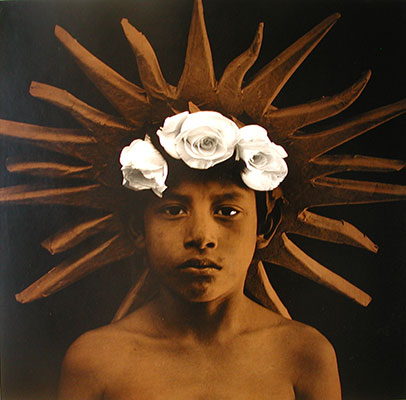
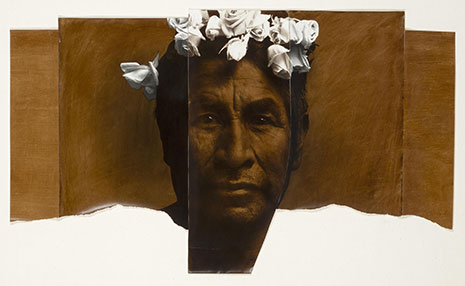
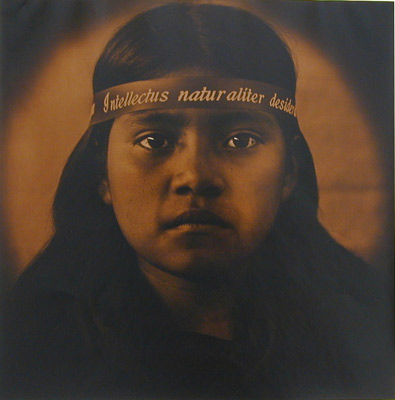
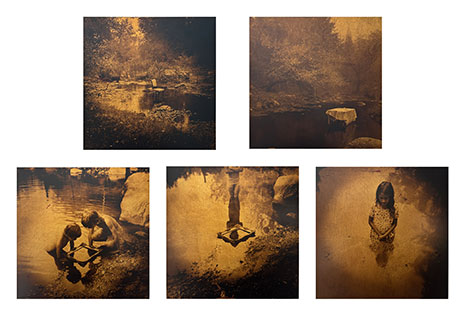
One of the most recognizable features of his photographic prints is the deep brown tone. He achieves this by painting a traditional black-and-white print with asphaltum, then selectively removing the varnish from key areas. The process helps make his images tangible objects and increases the visual power of his subjects as they look directly at you, the viewer. His subjects, mostly Mayan, appear filled with life, pain, and beauty.
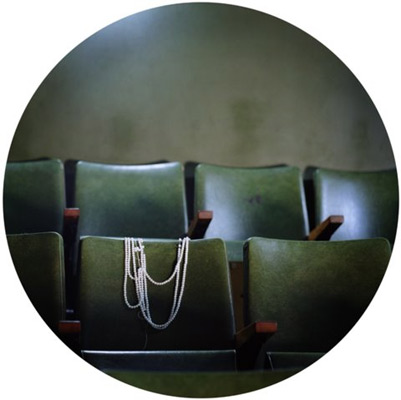
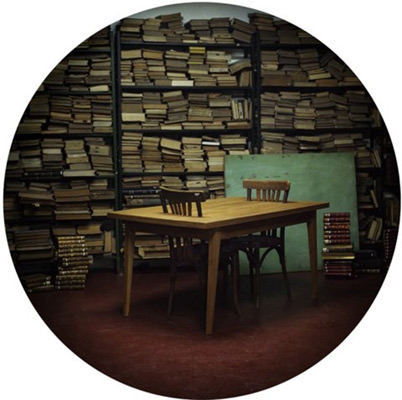
Also on display are a few newer color photographs which evoke a sense of “magic realism.” These images, in some ways, feel almost biographical, reflecting thoughts about relationship and fantasy. His use of the “round” format is as if we are peering through a tube or device, letting us into his private thoughts.
We at Scheinbaum & Russek are pleased to have gathered so many early works by this very important photographer and encourage our viewers to not just look at the images online but to join us and see his spectacular photographs in person.